"If respect could mark the Young, Restless and Reformed - respect and humility, it would go a long way in avoiding some unfortunate stereotypes."
Mitch Majeski & John Piper - Video 3 from waterbrook multnomah on Vimeo.
Showing posts with label The Church. Show all posts
Showing posts with label The Church. Show all posts
04 April 2013


02 April 2013
Piper to "the coming generation"
We will not hide them from their children, but tell to the coming generation the glorious deeds of the LORD, and his might, and the wonders that he has done. (Psalms 78:4)
For us, the (near) future is always uncertain. But uncertainty comes in shades. There may be a correlation but, at a time when the uncertain future has a darker hue, there seems to be a generational transition of leadership in the Christian church in America.
That sense is particularly poignant today. So this week, on the heels of his recent farewell to pastoral ministry at Bethlehem Baptist, I will post clips of an interview with John Piper from March of 2012. The conversation was framed as the passing of wisdom and lessons learned from one generation of pastor to the next. Each one adds some bright brush strokes to contrast that "darker hue."
Mitch Majeski & John Piper - Video 1 from waterbrook multnomah on Vimeo.
14 August 2012
Setting Out To Change An Evil World - M.L. Jones
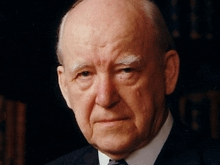
According to the Bible the whole mind and outlook of the world is opposed to God; it is under the dominion of Satan and in the grip of the wicked one. Christian men and women must realise that they are living in a world like that; that because it is a world that is opposed to God, it will be doing everything it can to drag them down. It will try to fill their minds here with things that will try to satisfy them and thereby keep them from God and Christ. It is a world in which Christians have to fight for their souls; it is easier to go down than to keep straight. 'We are of God, and the whole world lieth in the wicked one.'
But we see that the Apostle avoids certain errors as he goes on to tell us how we must relate ourselves to that. He does not tell us to start by trying to reform and improve the world. That is of course the tragedy, that so often the Church has imagined that that is her function. That has been the great trouble during the past years, since about the middle of the Victorian period when the Church became a kind of institution; when the line between the Church and the world became so vague as to be almost non-existent, and people talked about 'Christianising' society. There is nothing of that in the New Testament.
On the other hand we are not to turn our backs upon the world in the sense that we are to go right out of it. We are not told to become hermits or anchorites. That also has been an error, and it is very interesting, as you take the long story of the Christian Church from the beginning until today, to find how constantly those two extremes have been very prevalent. There have been those who have set out as Christian social reformers, and then there were those who said that was wrong and that the only thing was to go right out of it. That is the basis of monasticism, and the tendency is perhaps to revive that in certain forms.
But the teaching of this letter [1 John], as indeed the teaching of the whole New Testament, avoids both these errors and extremes; it is not a programme of world improvement, nor is it a programme of world renunciation. No, it gives us a picture of this kind of position in which we find ourselves, with this opposing spiritual force, this spiritual power that is represented by the world. Our fight is with that, and we are taught in this epistle that we can conquer it, we can rise above it, and we can defeat it, in spite of everything that is so true of it. In spite of the dangers that beset us on all sides, we can triumph and prevail; we can be 'more than conquerors'. And that is summed up very perfectly in this verse which we are now considering.
Martyn Lloyd Jones, commenting on 1 John 5:19
What I find stimulating about Jones' commentary is the constant presence of this debate to change the world or leave it. To hold a true course through the unbiblical extremes we must be intensely biblical people and we must begin with a fear of the Lord (Proverbs 9:10) - with a sound sense of a holy God who came into a wicked world to deliver His people (Colossians 1:13).
Additional Resources
To Change The World - James Davidson Hunter
Dualism is Bad JuJu - a series of posts (see 5 - 19 in the linked list) by Doug Wilson in response to Hunter
27 July 2012

29 June 2011
24 December 2010
Children Should Celebrate Christmas...
Week 4 of our series from John 1 - "From His Fullness We Have Received" entitled "He Gave The Right To Become Children of God"
27 November 2010
"I don't want to build a museum"
I may be a little late to the party on this one, but it is worth the watch.
22 October 2010
The Gospel is the Power: An Invitation to the 2010 - 2011 Leadership Training Class at Summitview
And God said, (Genesis 1:3)Light pierces darkness on the wings of words. Stars, planets, moons, nebula, blueberry bushes, cacti, coral, mountains, rivers, puppies, blue whales, leopards, ostriches, and flamingos arrive with words. Your fingers, your mouse, your phone, your kids, and your shoes are held together with words. Words revive, sanctify and preserve once-dead souls. Luther once proclaimed he had "driven the devil away with ink" because the right words are offensive weapons against the Great Accuser. In the end, a sword from the mouth of the final conquering King will strike down every opposition government.
In the beginning was the Word, and the Word was with God, and the Word was God. He was in the beginning with God. All things were made through him, and without him was not any thing made that was made. (John 1:1–3)
For I am not ashamed of the gospel, for it is the power of God for salvation to everyone who believes, (Romans 1:16)
take the helmet of salvation, and the sword of the Spirit, which is the word of God (Ephesians 6:17)
He is the radiance of the glory of God and the exact imprint of his nature, and he upholds the universe by the word of his power. (Hebrews 1:3)
Then I saw heaven opened, and behold, a white horse! The one sitting on it is called Faithful and True, and in righteousness he judges and makes war. His eyes are like a flame of fire, and on his head are many diadems, and he has a name written that no one knows but himself. He is clothed in a robe dipped in blood, and the name by which he is called is The Word of God. And the armies of heaven, arrayed in fine linen, white and pure, were following him on white horses. From his mouth comes a sharp sword with which to strike down the nations, and he will rule them with a rod of iron. He will tread the winepress of the fury of the wrath of God the Almighty. On his robe and on his thigh he has a name written, King of kings and Lord of lords. (Revelation 19:11–16)
(all emphases added)
Words matter to God. His power is manifested in syllables. Nothing changes, nothing improves, nothing finds life, indeed nothing exists, apart from His word. And so one of our great collective sins is the cheapening of words. Our unclean lips have perverted words to deceive, flatter, entertain and distract. How many words did you take in today? Chances are you are fatigued under the dead weight of rotting, meaningless words. Words that bring life are the need of the hour.
This year in Summitview's Leadership Training Class we will be considering how God rescues and transforms us as the Holy Spirit delivers words to our hearts, specifically the words of the Gospel.
For our sake he made him to be sin who knew no sin, so that in him we might become the righteousness of God. (2 Corinthians 5:21)Nothing is more practical or powerful than knowing the Gospel. It is the power of salvation for eternity and for today. Please consider attending these sessions or listening to each one as they are posted here along with any supplemental reading.
But now the righteousness of God has been manifested apart from the law, although the Law and the Prophets bear witness to it— the righteousness of God through faith in Jesus Christ for all who believe. For there is no distinction: for all have sinned and fall short of the glory of God, and are justified by his grace as a gift, through the redemption that is in Christ Jesus, (Romans 3:21–24)
LTC 2010-2011
In our first two sessions, we established the groundwork for the year by answering two fundamental questions:
Session 1 - What Is the Gospel? (Romans 3:21-27)
Session 2 - How Is the Gospel An Agent To Change? (Titus 2:11-14) - Notes
The remaining sessions build on this groundwork into more specific application (all take place from 7-8:45pm in the Summitview Auditorium).
Session 3 (November 9th) - Discovering Roadblocks to the Gospel: Asking and Listening Rightly for "The Sentence" (Hebrews 3:12-4:2)
Session 4 (December 7th) - The Role of Prayer and the Holy Spirit in Change (John 16:4-15)
Session 5 (January 11th) - How Gospel-Change Addresses Sin (Romans 8:13)
Session 6 (February 8th) - How Gospel-Change Works with Depression (Phil. 4:4-9)
Session 7 (March 8th) - How Gospel-Change Works in Family Issues (Eph. 5:22-33 and 6:1-4)
Session 8 (April 5th) - The Role of the Church in Sanctification of the Believer (Hebrews 10:19-24)
Session (May 3rd) - Set the Captives Free: How the Changing/Freeing Power of the Gospel Affects Our Evangelism (Titus 3:1-8)
And they sang a new song, saying, “Worthy are you to take the scroll and to open its seals, for you were slain, and by your blood you ransomed people for God from every tribe and language and people and nation, and you have made them a kingdom and priests to our God, and they shall reign on the earth.” (Revelation 5:9–10)Together, let's journey toward that day.
27 July 2010
Losing the Spark, Avoiding Structure: How "movements" die
Ideas, causes, grass-roots efforts, reformations, whatever you may call them, have a life cycle. A central spark ignites a collection of people to focus their energy and sense of purpose in a common direction and then, over time, it seems to lose its luster. Why? Tim Keller explains that this (almost) inevitable loss of luster may be attributed to the difficulty of leading a new movement and he offers a description of what successful leadership of a movement will require.
Additional Resources
Ideas for making this work in the local church
David Hurst, a Harvard scholar, summed up how movements become institutions this way — vision becomes strategy, roles become tasks, teams become structure, networks become organizations, recognition becomes compensation. It is wrong, however, to draw such a hard line between the two forms. It is typical in the Christian movement literature to be highly critical of “institutionalism,” for good reason. But the impression is left that all authority, central control, and formal processes are bad for ministry. The reality is more complex.Read the whole thing here.
It is natural for new churches and ministries to try very hard to stay informal, non-codified, and non-centralized. But part of what makes a movement dynamic is a unified vision, and that always requires some codification and control. As time goes on, to maintain the main engine of movement-dynamics – a unified vision — a ministry must adopt some of the aspects of institutions. A strong movement, then, occupies the difficult space between being a free-wheeling organism and a disciplined organization. A movement that refuses to take on some organizational characteristics – authority, tradition, unity of belief, and quality control — will fragment and dissipate. A movement that does not also resist the inevitable tendency toward complete institutionalization will lose its vitality and effectiveness as well. The job of the movement leader is to steer the ship safely between these two opposite perils.
Additional Resources
Ideas for making this work in the local church
19 June 2010
The Church feels like a family when you serve... Mark Driscoll video
We will be most connected where we give the most. It's pretty simple. Invest and you will get a return, sit on your keister and you get nothing and complain about it.
(HT Adrian Warnock, Josh Harris)
(HT Adrian Warnock, Josh Harris)
24 February 2010
Two free e-books!
 "A Funny Thing Happened on the way to Church..."
Churches often find themselves floundering in a sea of busy programs or dying the slow death that accompanies a lack of compelling vision. One simple distinction provides the understanding we need to see how these things happen and how they can change.
Jesus said he would build his church and called us to make disciples.
Often, our drive to build the church (to our own glory) runs us ragged and distracts us from the true mission of the church namely, to make disciples.
"A Funny Thing..." looks at the distinction between building churches and making disciples and how our choic of focus affects the church.
 "Membership, Leadership and Discipleship"
Well-defined words are necessary in any organization. Good leaders, then, are the protectors of words. In the church, there are many words worth protecting. Big words like substitution, atonement, redemption and deity need to be protected. And, although they may not seem as critical, we will find that words like membership, leadership and discipleship need protection as well.
07 February 2010
How Jesus Made Disciples (from theResurgence)
A great series on discipleship from the folks at the Resurgence:
Posts in this series:
Additional Resources
"Do not be afraid; from now on you will be catching men." - A message on Luke 5:1-11.(Discussion Questions)
The Trellis and the Vine - I'll mention it again... it is worth your reading!
Building The Church or Making Disciples
Why We Prefer Church-Building
The Downstream Effects of Church-Building
The Downstream Effects of Making Disciples v. Building Churches - Part 1
The Downstream Effects of Making Disciples v. Building Churches - Part 2
The Downstream Effects of Making Disciples v. Building Churches - Part 3
How does a church change from "church-building" to "disciple-making"? - Part 1
How does a church change from "church-building" to "disciple-making"? - Part 2
Posts in this series:
Hospitality Mission Emotion Monologue & Dialogue Stupid Questions The Heart Testing Object Lessons Discomfort Sending & Praying Pointing to the Father Pointing to the Spirit Dying Jesus Equips Jesus’ Teaching Methods
Additional Resources
"Do not be afraid; from now on you will be catching men." - A message on Luke 5:1-11.(Discussion Questions)
The Trellis and the Vine - I'll mention it again... it is worth your reading!
Building The Church or Making Disciples
Why We Prefer Church-Building
The Downstream Effects of Church-Building
The Downstream Effects of Making Disciples v. Building Churches - Part 1
The Downstream Effects of Making Disciples v. Building Churches - Part 2
The Downstream Effects of Making Disciples v. Building Churches - Part 3
How does a church change from "church-building" to "disciple-making"? - Part 1
How does a church change from "church-building" to "disciple-making"? - Part 2
14 January 2010
"Do not be afraid; from now on you will be catching men" - Luke series #7
The American church is in a state of crisis. Churches are faltering at a rate of 3500 per year and the hypocrisy of American Christianity is notorious. Why is the church no longer a community where lives are transformed from self-absorbed to God-entranced? ... from sadly narcissistic to joyfully generous?
This message in our series "the red letters" looks for answers in the calling of the first disciples in Luke 5:1-11.

Jesus' example reveals the importance of the right message, the right approach and the right leader.
The right message
Jesus was preaching the Gospel of the kingdom of God (Luke 4:18-18, 43). Without a resolve to uphold the orthodox Gospel at the root of all teaching, the church quickly abandons Christ for another Gospel (subtle though it may be). This removes the lifeblood of any fruitful, Christ-exalting church.
The right approach
Jesus preached to the crowds and chose a few "that they might be with him and he might send them out" (Mark 3.14). Our minds tell us, that for big impact, we need big programs and events. Jesus, because he cared for the crowds, focused on multiplying his life through a few. Too many churches are busy and, yet, do not know each other enough to truly spur one another on to love and good deeds. "More time with less people equals greater impact."
The right leader
Jesus revealed that he was the authority even where Peter was an expert (fishing). He is the head of the church. The church is to grow up into one head (Eph 4:15), following His example and teaching for His glory. Any confusion on this is disastrous to the church as, inevitably, a faulty personality or idea rises to take Christ's place.
The message examines the state of Summitview in these areas as well as the attitude that should naturally arise (shown in Peter) when these things are held correctly.
Additional Resources
Discussion Questions
This message in our series "the red letters" looks for answers in the calling of the first disciples in Luke 5:1-11.

Jesus' example reveals the importance of the right message, the right approach and the right leader.
The right message
Jesus was preaching the Gospel of the kingdom of God (Luke 4:18-18, 43). Without a resolve to uphold the orthodox Gospel at the root of all teaching, the church quickly abandons Christ for another Gospel (subtle though it may be). This removes the lifeblood of any fruitful, Christ-exalting church.
The right approach
Jesus preached to the crowds and chose a few "that they might be with him and he might send them out" (Mark 3.14). Our minds tell us, that for big impact, we need big programs and events. Jesus, because he cared for the crowds, focused on multiplying his life through a few. Too many churches are busy and, yet, do not know each other enough to truly spur one another on to love and good deeds. "More time with less people equals greater impact."
The right leader
Jesus revealed that he was the authority even where Peter was an expert (fishing). He is the head of the church. The church is to grow up into one head (Eph 4:15), following His example and teaching for His glory. Any confusion on this is disastrous to the church as, inevitably, a faulty personality or idea rises to take Christ's place.
The message examines the state of Summitview in these areas as well as the attitude that should naturally arise (shown in Peter) when these things are held correctly.
Additional Resources
Discussion Questions
17 October 2009
11 Reasons Why I Love Summitview - a "Church Appreciation" letter
It's pastor appreciation month and, as usual, the church has plans to honor its pastors on October, 25th. I want to beat them to the punch, though, and be the first to share my deep appreciation and love for them.

In my mind, the church is local and the church is specific. It is impossible for me to write anything about my love for the church, but I should be constrained to write of my love for my church. I know the church is not mine in the possessive sense. When I say “my church” I mean the local church with which I live and that has captivated my heart. If you will graciously indulge me, I will speak of my love for that church, for it is all I know.
So I exhort the elders among you, as a fellow elder and a witness of the sufferings of Christ, as well as a partaker in the glory that is going to be revealed: shepherd the flock of God that is among you, exercising oversight, not under compulsion, but willingly, as God would have you; not for shameful gain, but eagerly; not domineering over those in your charge, but being examples to the flock. (1 Peter 5.1-4)I love my church because;
- They worship Jesus. They don’t worship their leaders. They don’t worship their preaching. They don’t worship their programs. They don’t worship their worship. When the congregation comes together to “proclaim His excellencies,” they actually do it and IN TRUTH. I love the loss of self in that room every Sunday. Their voices boom and it always brings me to tears because they are my friends (see #4). Their worship uniquely points me to Christ!
- The men are strong. Last week I sat in a room full of two year-olds and 5 grown men singing songs complete with undignified motions – but oh the dignity that prevailed in that classroom! The men in my church understand that masculinity is about more about expending your strength in pursuit of Hebrews 12:1-2 than in pursuit of Proverbs 31:3. Not matter how much you pad it spiritually; manhood is not about finding that thing that makes men come alive if that thing is not Christ. My brothers have this conviction.
- The women are beautiful. There are many beautiful ladies in my church. They may not find any affirmation for their beauty in Vanity Fair (in either Bunyan’s or the newsstand version), but with grace, kindness, gentleness, compassion and zeal they bear the image of God.
- They are my friends. I know the struggles Family X has faced with Leukemia. I prayed with the man across the room this week. We prayed about his marriage and asked God for grace in his work. His worship is profound to me because I know the crucible that has refined it. Seeing their worship AND knowing their story speaks God’s satisfying goodness to my soul.
- Everyone calls me Mitch. I am their “Pastor”... but only when required. I am a brother first but, because God requires, my authority is respected and, dare I say, celebrated. The church is faithful to Hebrews 13:7,17 for God’s glory and for their advantage, not because of my respectable pedigree. Authority is valued but no one is extra special. They can correct me and they always follow me. I would be nothing without their words and their prayers.
- In my church, asking for forgiveness is not an aberration. Admitting you’re wrong is a sign of weakness and my church boasts in that weakness so that the power of Christ may rest upon them. They value repentance. They respect repentance. They know that all Gospel glory is preceded by repentance and they know repentance means change.
- They are generous. When the world is fearful and hording more, my church gives more. They are eager for the chance to exchange their Benjamins for eternal things. I think we could hide our giving boxes and they would still find a way to give. Every month, knowing things are tight, one of our families finds a way to anonymously give my family a $50 grocery card. Last week a brother asked me to be the courier of a bit of cash to friends who needed it. They love giving not the credit.
- They’re serious about their kids. They don’t just want good kids. They pray for worshippers. They are diligent with their biblical responsibility and diligent with their prayers. They understand Psalm 127 - the whole thing. They support each other in the culturally odd, totally exhausting efforts of being moms and dads.
- They are they. The building is a church building. They programs are church programs. In these sentences "church" is an adjective. When it is a noun, it represents the collective. Our church will exist underground, online or in the air, it is not the context that defines us it is the community.
- “See how they love each other!” They love in action and in truth. They love by cooking meals for the new moms and the sick friends. They love by speaking the truth at the risk of friendship. They love by loving Jesus supremely and find freedom to love in his ultimate affirmation.
- I appreciate my co-pastor, John Meyer. He has been my pastor for 13 years now and God has given me so much through his life. I owe my biblical worldview, my appreciation for creation and the Creator, my calling into ministry and my hand motions to John. It is a great joy to pastor with him and the amazing team of ministry directors God has given our church. I would not be following Christ if it were not for these men.
It may seem that I see no error in my church and, for that slant, I make no apologies. The error I see, I see between nails and wood. It is my privilege and it is His command to focus on my church's beauty:
Finally, brothers, whatever is true, whatever is honorable, whatever is just, whatever is pure, whatever is lovely, whatever is commendable, if there is any excellence, if there is anything worthy of praise, think about these things. (Philippians 4.8)Without apology, I love my church.
14 October 2009
"Real, Gritty Joy: No One Else Like Him" - Week 6
Week 6 in our series on Paul's letter to the Philippians.

A Summary: "No One Else Like Him"
Starting in this passage (Philippians 2:19-30), Paul's defense for enduring joy moves from doctrine to example. This passage contains the remarkable descriptions of selfless love and sacrifice in Timothy and Epaphroditus. From these examples we learn much of what it means to live in the oneness for which Jesus prayed in John 17:21,23.
Who were these men? What were their primary motivations and interests? Can self-sacrifice like their's lead us to joy?
Why is the life of the church important in redemptive history? How do we know if our relationships are exemplary of the gospel? If they aren't, how do we change?
Listen to the message here.
Additional Resources
"It is church life like this that really conquers the world, as it did the ancient world. Men and women saw something in the Christian society that they had never seen anywhere else. We get glimpses of it here, but just imagine its effect on any township or village or country district! And this has been repeated many times in history; every revival reproduces this kind of thing, and this, it seems to me, is the thing that is greatly needed in the world at this present time." (Martyn Lloyd Jones, commenting on this passage in The Life of Joy and Peace)
"So whom will you follow? What contemporary Christians will serve you well as good models? Emulate those who are interested in the well-being of others, not in their own. Be on the alert for Christians who really do exemplify this basic Christian attitude, this habit of helpfulness. They are never the sort who strut their way into leadership with inflated estimates of their own importance. They are the kind who cheerfully pick up after other people. They are not offended if no one asks about them; they are too busy asking about others." (D. A. Carson, commenting on this passage in Basics for Believers)
29 September 2009
Nothing can be irrelevant to the proposition that Christianity is true
If Christianity should happen to be true ... then defending it may mean talking about anything and everything. Things can be irrelevant to the proposition that Christianity is false, but nothing can be irrelevant to the proposition that Christianity is true. All things not only may have something to do with the Christian God, but must have something to do with Him if He lives and reigns. -G. K. Chesterton
26 September 2009
"What an ornament to the Church!"

Now, seeing the case of weakness in the converted is so sad, how diligent should we be to cherish and increase their grace! The strength of Christians is the honour of the Church. When they are inflamed with the love of God, and live by a lively working faith, and set light by the profits and honours of the world, and love one another with a pure heart fervently, and can bear and heartily forgive a wrong, and suffer joyfully for the cause of Christ, and study to do good, and walk inoffensively and harmlessly in the world, are ready to be servants to all men for their good, becoming all things to all men in order to win them to Christ, and yet abstaining from the appearance of evil, and seasoning all their actions with a sweet mixture of prudence, humility, zeal, and heavenly mindedness - oh, what an honour are such to their profession! What an ornament to the Church; and how serviceable to God and man! Men would sooner believe that the gospel is from heaven, if they saw more such efforts of it upon the hearts and lives of those who profess it. The world is better able to read the nature of religion in a man's life than in the Bible. - Richard Baxter, The Reformed Pastor pg. 98
24 September 2009
A Mission to Soldiers in Afganistan: From Mars Hill Church in Seattle
From theResurgence:
Read more about Mars Hill's Military Mission and find out how to contribute here."Last month marked the most US deaths in Afghanistan since we got there 8 years ago. Combat affords us the opportunity to acknowledge death and contemplate what is important in our lives. So when the gospel gets a hold of us, we have no other choice but to spread the word. 'When you are a starving man among starving people and you discover a banquet in the wilderness, you become a debtor to all.' (John Piper, Desiring God)
Our goal with the Mars Hill Military Mission is not to thank service members for 'protecting' our freedom and 'serving' their country; rather, it is to have them share in the blessings we have so graciously—and undeservedly—been afforded by the blood of Jesus on his cross. Not only is there forgiveness of sins on the cross, there is new life at the resurrection.

22 September 2009
The Osmosis of Influence Through the Church's Permeable Walls
Doug Wilson shares and excellent word picture regarding the push and pull of the influence of the Church on culture and culture on the Church:
The walls of the church are permeable, and this is by God's design. This means that when the church is being the church, there is no way to keep the influence of this from seeping into the world. On the flip side, when the church has lost her vision, or her focus, or they have kept both but only in the confessional documents, this means that the influence of the world will seep into the church.
Some church bodies seek to address this problem by removing the permeability of the walls. The church assumes a bunker mentality, which is just another way of saying that it has become a sect. The other response is to abandon all efforts at keeping the church functioning self-consciously as the church, and instead of seeping in, the world floods in.
When, founded by true worship of Christ, the osmotic pressure to proclaim Christ exists within the Church, she steadily influences the culture while preserving her own heart. Therefore it is critical that we press on to know Him and to love the Gospel (Hosea 6:3, Psalm 48:9, Eph. 3:14-19, Phil. 1:9-11). That pursuit is the hope of the world.
15 September 2009
"Real, Gritty Joy: The Tie That Binds" - Week 2
Week 2 in our series on Paul's letter to the Philippians; "Real, Gritty Joy."
A Summary of Week 2
Every one of our relationships is strained by the desire for intimacy and a propensity to selfishness. Our drive to find meaning and identity moves us together and, like a bomb in a crowded market, our sin destroys - the greatest damage done to those closest to us. The very thing that, we believe, holds the key to our joy becomes our burden and a source of pain.
Our relationships need saving but that is not to say they need more focus. It is our intense focus on "getting" from our relationships that, in the end, is the cause of their death. Like a snake eating its tail, we devour each other (Gal. 5:14-15). Redemption must come from something greater than ourselves.
In the midst of this constant relational cannibalism (which is the history of the world), the apostle Paul reveals a glimpse of a new way. His relationship with the Philippians was a source of joy:
I thank my God in all my remembrance of you, always in every prayer of mine for you all making my prayer with joy, because of your partnership in the gospel from the first day until now. (Philippians 1.3-5)
How could this be? Answer: The source of this joy could not have been horizontal. The relationships or personalities themselves could not have been a lasting source of happiness. The source of Paul's great joy and the secret to our joy in relationships lies in this little phrase:
"because of your partnership in the gospel from the first day until now."
A Holy Feedback Loop
When our relationships exist for our own benefit, they eat themselves alive. When they exist for the glory of Jesus Christ and the spreading of His Gospel, they find a constant source of life, meaning and mutual affection.
There is a feedback loop here. The more the gospel is the center of our relationships (as the foundation and the reason), the more we see of God's character and the power of the Gospel. This feeds our hungry souls with truth about God's sovereign ability, his tender grace to us in Christ and our secure identity in Him. Fed souls need not take from others, instead, they pour out life. A community of God-satisfied, self-forgetful people builds itself up. This holy community, this Body of Christ, now becomes a better reflection of Christ and the Gospel which, in turn, more deeply satisfies its souls - a holy feedback.
It is important for us to acknowledge that this is to be the rule in local churches (Ephesians 4) not the exception! We must be careful to hold on to God's promises to build this community in gospel-centered churches (Phil. 1:6, 1 Peter 4:10-11 and 2 Peter 1:3-8) and we must be careful to reject the many other relational "gospels" which really are no gospels at all (Gal. 1:6). Our real joy and the propagation of the Gospel depend on it.
Related Items:
Subscribe to:
Posts (Atom)